
Publication List
Representative work showcasing interdisciplinary research spanning animal movement, urban ecology, and technological innovation in wildlife biology.
© Marc Graf & Christine Sonvilla
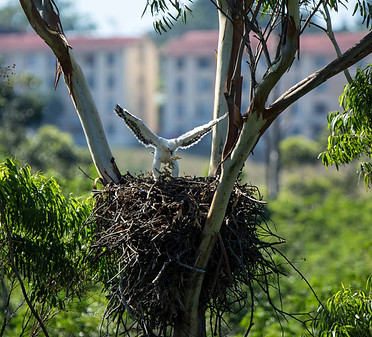
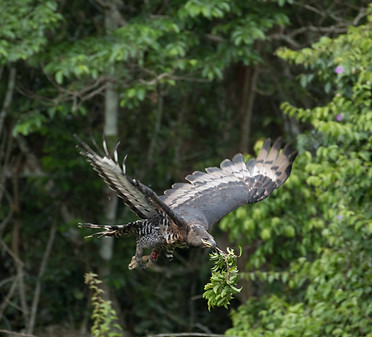
Resource use and associated energy expenditure of African crowned eagles in an urban-forest mosaic landscape
Howard, Jain et al. 2026 Conservation Physiology
How can a large forest eagle survive in a rapidly growing city? In Durban, South Africa, Crowned eagles have adapted to living in a mosaic of natural forest and urban areas, making them a fascinating example of how wildlife can persist in human-dominated landscapes. We used GPS and activity sensors to track where crowned eagles moved and how much energy they expended in different parts of their habitat. They consistently preferred forested areas, and used more energy in built-up areas, with energy expenditure increasing as they moved farther away from protected green space boundaries. These findings suggest that the network of forests and other natural areas embedded within cities can provide important, lower-cost habitat for wildlife. Maintaining and connecting such green spaces may therefore be essential for supporting biodiversity—including large predators at the top of the food chain.
© Marc Graf & Christine Sonvilla

© Wilhelm Geisbauer
Decoupling of emigration timing and skill acquisition
in a saturated population of golden eagles
Brønnvik et al. 2026 Royal Society Open Science
Growing up means learning the skills needed to survive independently, but becoming capable does not necessarily mean leaving home. For young Golden Eagles, developing strong flight and hunting skills is essential, yet they can remain in their parents’ territory for months after becoming proficient flyers. We used GPS tracking to investigate whether the development of flight skills determines when young eagles begin exploring beyond their natal territory and when they eventually emigrate. Surprisingly, we found little evidence that flight performance drives either process. The timing of emigration instead appears to depend on a broader combination of ecological and behavioural factors. Staying with parents may continue to provide important benefits, including access to food, protection from conspecifics and opportunities to gain experience. Our findings highlight that the transition to independence in golden eagles is a gradual process shaped by more than the development of physical skills alone.

© Wilhelm Geisbauer

© Daniel Koch
Ravens use conspecifics and heterospecifics
to navigate risky foraging scenarios
Damini, Lindeman et al. 2026 Behavioral Ecology
Ravens use wild boars as ‘first tasters’ to assess whether an unfamiliar foraging site is safe. For scavengers approaching a new food source can carry risks. Our study shows that ravens can reduce this uncertainty by using information from other animals. Rather than always investigating an unfamiliar site themselves, they may wait for wild boars to arrive and start feeding before approaching. In this way, the boars effectively provide an indirect signal that the site is safe to use. Ravens also adjust their behaviour towards other ravens when faced with uncertainty. They are more likely to forage in larger groups and to steal food from other ravens, allowing them to benefit from a food source without necessarily being the first individual to access it. Together, these behaviours suggest that ravens have several ways of reducing the risks associated with unfamiliar situations: they can follow the lead of another species, rely on the safety provided by larger groups, or take advantage of information or even food recources gathered by other ravens. Flexible strategies like the use of social information could make ravens, and potentially other scavengers, particularly adaptable to environmental change.

© Daniel Koch

© Evelyn Hofer
Fluctuations in direct human presence, not predictable weekly cycles,
influence avoidance behaviour in ravens
Jain et al. 2026 Movement Ecology
Human activity follows regular rhythms, especially the weekly cycle of workdays and weekends. The “weekend effect” hypothesis suggests that these predictable shifts in human behaviour can create cyclical conditions that influence wildlife - particularly where animals depend on human-related food sources or where they are sensitive to our direct presence. In this study, we tested whether ravens respond to this kind of predictable 5+2 weekday-weekend pattern, or whether they instead react more flexibly to real-time changes in human disturbance. Ravens regularly exploit supplementary food intended for animals in the game park, while also experiencing varying levels of visitor presence across the week. Using long-term GPS tracking data, we found limited support for an anticipated weekend effect. Instead, ravens consistently adjusted their behaviour in response to current levels of human activity, reducing foraging at the site and increasing their use of surrounding areas when disturbance was high. Overall, the results show that ravens do not simply follow a rigid weekly schedule of human activity. Rather, they flexibly track and respond to fluctuating disturbance levels, highlighting how adaptable wildlife can be in human-modified environments where resources and risks change over time.

© Daniel Koch

© Marc Graf & Christine Solvilla
The impact of urban-related sensory and risk factors on owls:
A systematic review.
Orlando et al. 2026 Journal of Ornithology
Owls, as top predators and highly specialised nocturnal hunters, are particularly sensitive to land-use changes such as urbanisation and can serve as important indicators of ecosystem health. In this review, we examined global research on how urban-related factors affect owls, focusing especially on roads, artificial light at night (ALAN), noise pollution, chemicals, and human disturbance. We found that collisions with vehicles are the most frequently documented human-related threat to owls. Roads can create dangerous ecological traps: they may attract owls because roadside areas often contain abundant prey and convenient hunting perches, yet they also expose owls to a high risk of being struck by vehicles. Sensory pollution, particularly anthropogenic noise and artificial light, appears to further shape how owls use these habitats. Noise can interfere with owls’ ability to detect prey and communicate, while artificial light may either attract or repel owls depending on how their prey species respond to illumination. Despite the growing importance of these issues, research on sensory pollution remains surprisingly limited, especially given that owls rely heavily on hearing and low-light vision for survival.

© Vivian Huacuja García

© Brendan Smith
Extraordinary case of nest usurpation and mixed clutch:
Crowned Eagle incubates two Egyptian Goose eggs plus its own
Sumasgutner et al. 2026 Journal of Raptor Research
We describe a remarkable and previously undocumented event in South Africa, where a Crowned Eagle was observed incubating three eggs - two of which had been laid by an Egyptian Goose in the eagle’s nest. After the goslings hatched, the eagle initially showed surprising tolerance, brooding and even attempting to feed them despite their very different (precocial) behaviour. However, this unusual situation quickly broke down: one gosling jumped off the nest, while the other was eventually killed and eaten by the eagle, and the eagle’s own egg ultimately failed to hatch. This rare case highlights how aggressive nest usurpation by Egyptian Geese can disrupt the breeding of large birds of prey, especially in human-altered environments where both species increasingly overlap. It also shows that eagles do not recognise or reject foreign eggs, leading to reproductive failure. Overall, the findings emphasise the importance of understanding competition between species, particularly where invasive or expanding populations may impact vulnerable raptors.

© Brendan Smith

Spatio-temporal patterns of juvenile common ravens integrating into a free-flying non-breeder flock
Bapat, Jain et al 2026 iScience
Living in a group offers clear advantages, from better access to food to increased survival. But how animals actually become socially integrated remains poorly understood. Using GPS biologging, we tracked juvenile ravens after they left their natal area to investigate how they approach and join non-breeding groups. By analysing movement patterns in space and time, we tested whether young birds show early signs of social integration before formally becoming part of a group. Juveniles differed from older birds in how they used space, and their movements were influenced by rearing background, with birds raised by wild parents behaving differently from those with a captive background. Familiarity also mattered: ravens released together were more likely to use the same areas, indicating that social bonds shape spatial behaviour.

© Mariia Klymenko

© Andrew Orr
Tracking solutions to a persistent threat: spatial movement patterns reflect lead exposure in critically endangered California condors
Jain et a. 2025 Ecotoxicology
California Condors are critically endangered, and one of their biggest threats comes from humans: lead ammunition. When condors scavenge on carcasses shot with lead bullets, they can ingest tiny fragments of toxic metal – with devastating health effects. Detecting lead exposure usually means invasive and costly testing. But what if condors’ own movement patterns could tell us when they’ve been exposed? In our latest study, we combined blood test results from wild condors with GPS tracking data. We found that condors with high lead levels roamed more widely and spent more time in areas known to be risky. They also overlapped more with each other than healthy condors. But they didn’t slow down or change how much they moved over time, so we couldn’t spot signs of illness just from movement alone. Still, these early findings offer a promising step toward future research exploring how movement patterns can be used to detect, and provide early warnings of at-risk condors.

© Andrew Orr

© Daniel Koch
Startling ravens at foraging: Differences in anti-predator behaviour can be explained by age rather than personality
Weißenborn et al. 2026 Journal of Avian Biology
Even when faced with the same scenario, individuals may respond in different ways: while one individual may flee as soon as it recognises danger, another of its conspecifics may wait until the very last moment before evading the threat. When such between-individual behavioural differences are consistent across time and contexts, they are commonly referred to as “animal personality”. In this study, we investigated whether free-flying ravens show stable behavioural differences in the personality trait “boldness” by examining their startle responses to audio playbacks of potential threats (i.e., the calls of birds of prey and gunshots). Our results revealed age-related differences: juveniles started feeding sooner than subadults and adults after a startle event. Furthermore, all birds displayed stronger anti-predator behaviour in response to the audio of bird of prey calls than to gunshots.


© The Peregrine Fund
State of the World's Raptors: Raptor Conservation in Europe
Buij et al. 2025 The Peregrine Fund
Many of the world’s raptors, or birds of prey, are experiencing declines and are increasingly threatened with extinction. The State of the World’s Raptors provides a novel approach to setting priorities for the conservation of raptors across the globe. Biologists from The Peregrine Fund, the US Geological Survey, and the Zoological Society of London divided the world into 14 raptor conservation regions. They then determined priorities for raptor conservation based on the evolutionary distinctiveness and extinction risk of the species that occur in each region. Priorities for each raptor conservation region were documented in separate chapters, each of which was led by local raptor experts. The State of the World’s Raptors thus provides regional perspectives on global priorities to save raptors from extinction.

© Robert Kreinz

© Sonia Kleindorfer
Home Range Sizes of Urban Nankeen Kestrels in South Australia
Headland et al. 2025 Journal of Raptor Research
Using high-resolution GPS tracking, we studied the home-range sizes of Nankeen Kestrels across an urbanisation gradient in Australia – the first year-round analysis for this species. Surprisingly, home-range size was not related to urbanisation, and kestrels showed occasional long-distance foray flights beyond their core areas. Our results highlight the importance of safe urban infrastructure and open green spaces to support urban raptors.

© Taylor Headland

© Silvia Damini
When to mob? plasticity of antipredator behavior in common ravens’ families (Corvus corax) across offspring development
Damini et al. 2025 Animal Cognition
Adult ravens use different strategies to defend themselves against predators, with mobbing being the most well-studied. Mobbing involves two key behaviours: loud, repeated vocalisations (called scolding) to recruit other ravens, and flying at or approaching the predator to drive it away. In this study, we observed how captive raven families responded to a potential predator at two stages of chick development. We found that parents reduced their mobbing behaviour as their offspring matured and developed better motor and cognitive skills. This decrease may serve to encourage young ravens to assess threats on their own. Indeed, the older the offspring were, the more likely they were to notice the predator. However, only a few individuals actually joined in mobbing while still part of the family group. In the experiment one of our researchers was dressed as a "dangerous human", wearing a mask to hide the face and holding a dead raven which triggers a clear antipredator response. The raven in hand died of natural causes.

© Daniel Koch

© Thomas Thusholt
Golden eagles regularly use gravity waves to soar in the Alps:
New insights from high-resolution weather data
Carrard et al. 2025 Royal Society Interface
Soaring birds like golden eagles have mastered the art of flying using little energy. They use invisible "lifts" in the air - so-called thermals (rising columns of warm air) and orographic lift (wind deflected upwards by mountains). Our latest research uncovers another, less well-known source of uplift that golden eagles use: gravity waves. Not the cosmic kind Einstein talked about - but atmospheric gravity waves. They form when air is pushed upwards, often over mountain ridges, and then oscillates up and down like ripples in a pond. These waves can extend far above the peaks and provide strong, smooth lift that experienced birds - and even paragliding pilots - can use to stay airborne for hours. In fact, in the European Alps, paragliders often chase lenticular clouds (those lens-shaped formations that look like UFOs), which are signs of gravity waves. Now, we’ve shown that golden eagles are using these same invisible highways in the sky.

© Herbert Wölger

© Josef Hemetsberger
Red kite (Milvus milvus) collision risk is higher at wind turbines with larger rotors and lower clearance, evidenced by GPS tracking
Škrábal et al. 2025 Biological Conservation
Wind turbines are important for achieving renewable energy goals, but they can pose serious risks to wildlife, particularly birds and bats. Our latest study investigates collisions between red kites and wind turbines, using GPS tracking data collected between 2017 and 2024, with 41 documented cases across Europe. Collisions occurred year-round, with peak numbers during spring and autumn migrations. Importantly, turbine design strongly influenced collision risk: turbines with larger rotor diameters and lower rotor clearance had significantly higher probabilities of collision. This research highlights the urgent need for turbine designs that minimise overlap with bird flight heights and supports legislative adjustments to height restrictions to protect vulnerable raptor species.

© Patrick Moesinger

© Ralph Buij
Using wing bar patterns to identify sex in Crowned Eagles
Stephanoaetus coronatus: A misleading field characteristic
Sumasgutner et al. 2025 Ostrich - Journal of African Ornithology
Our new study challenges the long-held assumption that Crowned Eagles can be sexed based on wing bar patterns. Our findings reveal significant individual variation in wing bar patterns, with no consistent differences between males and females. This suggests that plumage polymorphism or individual variation, rather than sex, may explain the patterning. We show that wing bar counts are not a reliable tool for sexing Crowned Eagles and lay the groundwork for future research on plumage development in ageing individuals.
© Lauren Common


© Giacomo dell'Omo
Perceived and observed biases within scientific communities:
A case study in movement ecology
Shaw et al. 2025 Proceedings of the Royal Society B: Biological Sciences
Scientific research isn’t just shaped by questions and data, it’s also influenced by who conducts the work, where they do it, and how findings are shared. In this study, we examined patterns of authorship, field work location, and institutional affiliations in the field of movement ecology. We found geographic and demographic imbalances linked to economic and social factors, such as “parachute science” and unequal access to fieldwork. Surveys also revealed that while many researchers are aware of bias, discussions often overlook key issues. Addressing these gaps is essential for making science more inclusive and equitable.


A LEAP Forward in Wildlife Conservation: A Standardized Framework to Determine Mortality Causes in Large GPS-Tagged Birds
Panter, Nebel, Raab, Strauss et al. 2025 Ecology & Evolution
Wildlife faces many threats from human activities, and understanding where and why animals die is crucial for conservation efforts. GPS tracking technology helps researchers monitor animal movements and locate deceased individuals, but determining the exact cause of death remains challenging. To address this, we developed the LIFE EUROKITE Assessment Protocol (LEAP) – a standardised approach for identifying causes of mortality in large birds fitted with GPS tags. LEAP combines three key sources of information: (1) GPS tracking data – to pinpoint where and when a bird stopped moving. (2) Site investigation – to gather evidence from the location. and (3) Necropsy (animal autopsy) – to analyse the remains for definitive causes of death. We applied LEAP to 329 deceased red kites, which allowed us to identify predation events but also poisoning incidents. LEAP offers clear guidelines for investigating mortality and represents a major step forward in wildlife conservation.


© UCT Red winged Starling Project
High human presence is correlated with lower faecal glucocorticoid metabolite levels in an urban bird population
Nhlapo et al. 2025 Hormones and Behavior
We evaluated four enzyme immunoassays to identify the most suitable method for quantifying fecal glucocorticoid metabolites (stress-related steroid hormones) in red-winged starlings. The validated assay, 11-oxoaetiocholanolone, was then used to measure glucocorticoid metabolite concentrations in the droppings of free-ranging urban starlings, assessing their response to fluctuating human presence. Interestingly, glucocorticoid levels were lower on weekdays when human activity was higher, suggesting that these birds may benefit from human presence – likely due to increased food availability and a perceived reduction in predation risk.

© Campbell Fleming

© Olaf Brockmann
Habitat heterogeneity influences integument carotenoid levels in female Eurasian kestrels (Falco tinnunculus)
Hochleitner et al. 2025 Ibis
Agricultural intensification has reduced habitat diversity, leading to declines in farmland birds such as Eurasian kestrels. Raptors are important indicators of ecosystem health. In this study, we examine how habitat, genetic, and dietary diversity affect five health parameters: colouration, dietary antioxidants (carotenoids), haematocrit, body condition, and parasite infections. Our study suggests that individual traits and foraging ecology should be considered alongside habitat diversity to understand kestrel health, helping to understand the impact of land-use changes on farmland birds.

© Olaf Brockmann

© UCT Black Sparrowhawk Project
Plumage polymorphism in the black sparrowhawk (Accipiter melanoleucus)
is strongly associated with the expression level of agouti signaling protein
Rodseth et al. 2025 Journal of Heredity
We investigated the genetic basis of colour variations in black sparrowhawks, an African raptor species with two adult plumage types – light and dark – and varied rufous juvenile coloration. Adult colour differences are due to varying levels of eumelanin (a type of pigment) in feathers, but not to mutations in key pigmentation genes, such as MC1R or ASIP. Instead, the lighter adult morphs showed higher ASIP gene activity, which suppressed other genes involved in melanin production. In juveniles, differences in rufous plumage were linked to varying levels of two pigments, eumelanin and pheomelanin, with similar patterns of gene activity observed.

© Margaret Maciver

© UCT Black Sparrowhawk Project
Pleiotropic effects of melanin pigmentation: haemoparasite infection intensity but not telomere length is associated with plumage morph in black sparrowhawks
Rodseth et al. 2024 Royal Society Open Science
Black Sparrowhawks occur in two plumage types - light and dark morphs - and scientists have long suspected that these colour differences may be connected to other biological traits. Using blood samples from birds in South Africa, we examined infection levels of blood parasites and measured telomere length, a marker often associated with ageing and cellular health. We found that light-coloured birds carried higher levels of blood parasites than dark birds, suggesting that pigmentation may be linked to immune function. However, we found no evidence that parasite infection or colour morph affected telomere length. These results indicate that colour variation may influence some aspects of physiology, but not necessarily overall cellular ageing, helping us better understand why multiple colour forms persist in wild populations.

© UCT Black Sparrowhawk Project
© Petra Sumasgutner

Developmental stage shapes the realized energy landscape
for a flight specialist
Nourani et al. 2024 eLife
Animals try to optimise their energy use by adjusting where and how they move. While much research has focused on how external environmental factors influence these energy dynamics, this study highlights the importance of the animal's internal state, such as age and developmental stage, in shaping how they experience and navigate their energy landscape. We focused on the golden eagle population in the Central European Alps, a species that relies on energy-efficient soaring flight. In an international team led by the Max Planck Institute of Animal Behavior and the Swiss Ornithological Institute, we tracked 55 young eagles and found that as the birds matured, their ability to move efficiently across the landscape improved significantly. Over the first three years of their independence, the area they could potentially navigate increased by 2170-fold. This research shows that an animal's development plays a crucial role in shaping its energy landscape, which in turn affects its movement patterns. Understanding this can help predict animal behaviors and responses to changing environments.

© Rainhard Thaller

© Christine Emberger
Integument colouration and circulating carotenoids in relation
to urbanisation in Eurasian kestrels (Falco tinnunculus)
Sumasgutner et al. 2023 Science of Nature
New paper by MSc alumni Tom Nilles, Lukas Hochleitner and colleagues on urban kestrels showing that nestlings which were being raised in more urbanised areas displayed, unrelated to the burden of ectoparasites, a more bluish face colouration and an overall less intense colouration which was furthermore associated with a lower concentration of circulating carotenoids absorbed through the diet. Our results support the hypothesis that the entire urban food chain is carotenoid deprived and only prey of low quality with low carotenoid content is available (e.g., fewer carotenoids in urban trees -> insects -> small birds -> kestrels).
